











Table of Contents
- Introduction
- The Best Project and Vendor Management and Process Automation: XTRF
- The Best Translation Business Management System for Language Service Providers, Freelancers, Startups, and Small Businesses: LSP.expert
- The Best Translation Business Management System for Small-to-Medium and Enterprise Businesses: ServiceNow
- The Best Translation Business Management System for Ease of Use: Protemos
- The Best Translation Business Management System for Customer Relationship Management: LBS Suite
- The Best Translation Business Management System for Integrations: TranslationProjex
- Conclusion
1. Introduction
Translation businesses face increasing pressure to adapt quickly.
Clients expect faster turnarounds, consistent quality, and seamless coordination across teams. This is where Translation Business Management Systems (TBMS) become essential. They can automate workflows, reduce administrative burdens, and provide tools specific to many types of businesses.
Some businesses prioritize vendor management or automated processes. Others focus on simplicity, integrations, or managing client relationships. The variety of available tools makes finding a system that fits specific needs easier.
This guide outlines the top choices in TBMS for 2026, with recommendations based on unique strengths like project management, ease of use, or integrations.
2. The Best Translation Business Management System for Project, Vendor Management and Process Automation: XTRF

Managing projects and vendors effectively is essential for mid-sized to large language service providers. With multiple teams, complicated workflows, and tight deadlines, the ability to coordinate resources efficiently can mean the difference between success and missed opportunities.
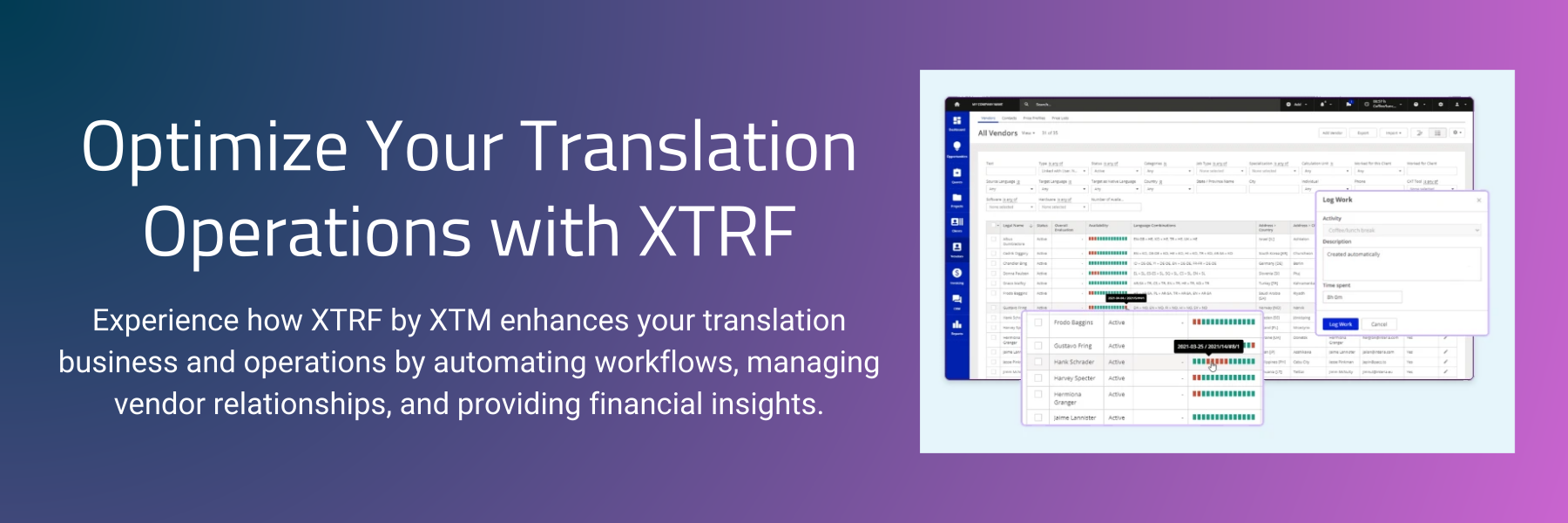
This is where XTRF by XTM excels, offering advanced vendor management tools that address real-world challenges. Its features go beyond basic scheduling. The platform tracks vendor availability by considering vacations, absences, speed, and capacity. This granular level of detail helps project managers allocate resources more effectively.
Customization is another standout feature. XTRF allows users to tweak workflows, dashboards & invoice templates to suit specific business needs. This adaptability makes the system versatile, whether managing recurring projects or handling one-off tasks with unique requirements.
A language service provider managing hundreds of vendors can reduce workflow inefficiencies by using XTRF’s automation tools. The platform enables them to assign tasks automatically, minimizing communication gaps and improving project timelines.
Pros:
- Advanced vendor management tools that track availability, capacity, and speed
- Customizable workflows, dashboards & invoice templates
- Automation tools that minimize communication gaps and improve timelines
- Suitable for mid-sized to large language service providers
3. The Best Translation Business Management System for Freelancers, Startups, and Small Businesses: LSP.expert
Freelancers, startups, and small businesses need tools that simplify their operations without unnecessary bells and whistles. Managing clients, projects, quotes, and invoices can quickly become overwhelming for small teams, but LSP.expert provides a solution that balances affordability, simplicity, and efficiency.
LSP.expert’s core features streamline key tasks, helping users organize client information, track project progress, generate quotes, and handle invoices in one place. Its intuitive design means there’s no steep learning curve, making it accessible for even the smallest operations.
LSP.expert’s core features streamline key tasks, helping users organize client information, track project progress, generate quotes, and handle invoices in one place. Its intuitive design means there’s no steep learning curve, making it accessible for even the smallest operations.
LSP.expert avoids the complexity that larger platforms often introduce by focusing on essential features. It provides just what small teams need to stay organized and efficient without unnecessary distractions.

LSP.expert Pros:
- An affordable and simple design ideal for small teams
- Streamlines client management, project tracking, quotes & invoicing
- Easy to learn with no steep learning curve
LSP.expert Cons:
- Limited scalability for growing businesses
- Fewer advanced features compared to larger platforms
- Basic design may not suit users needing specialized tools
4. The Best TBMS for Small-to-Midsize and Enterprise Businesses: ServiceNow
ServiceNow delivers a powerful, scalable platform designed to handle the complex needs of small-to-medium and enterprise-level translation businesses. Its extensive automation capabilities streamline business operations, making it easier to manage projects, track vendor performance, and oversee financial workflows.
ServiceNow’s flexibility allows companies to customize their setup to align with evolving business goals, creating a solution that grows with the organization.
ServiceNow’s flexibility allows companies to customize their setup to align with evolving business goals, creating a solution that grows with the organization.

ServiceNow Pros:
- Comprehensive workflow automation for large-scale operations
- Highly customizable to fit diverse business needs
- Strong integration capabilities with existing enterprise tools
- Scalable platform suitable for growing and global businesses
ServiceNow Cons:
- Expensive subscription plans may deter smaller organizations
- Complex implementation process requiring technical expertise
- Customization can be time-consuming and resource-intensive
5. The Best TBMS for Ease of Use: Protemos
Protemos simplifies translation business management for small to medium-sized providers. Its intuitive design eliminates the frustration of complicated software, offering a straightforward platform for essential tasks.
The system focuses on key functions like project management, client tracking & invoicing. These tools work together to streamline daily operations, cutting down the time spent on repetitive administrative tasks. Protemos makes it easy to stay organized without the need for extensive training or setup.
Protemos Pros:
- Intuitive and straightforward interface
- Efficient project management, client tracking & invoicing tools
- Minimal setup and training required
Protemos Cons:
- Lacks advanced features for complex workflows
- Limited customization options
- May not scale well with larger teams
6. The Best TBMS for Customer Relationship Management: LBS Suite
Strong client relationships drive repeat business and build trust. Customer Relationship Management (CRM) tools are important in maintaining these connections by organizing communication, tracking interactions, and not letting a client fall through the cracks. LBS Suite integrates advanced CRM features with translation project management, providing a centralized hub for both tasks.
Users can manage client communication channels while simultaneously overseeing translation projects. The system tracks client preferences, project histories & key deadlines, making it easier to deliver personalized service.
LBS Suite Pros:
- Advanced CRM tools integrated with project management
- Centralized hub for client communications and project oversight
- Tracks client preferences, history & deadlines for personalized service
LBS Suite Cons:
- Interface can be overwhelming for new users
- Higher learning curve for CRM features
- Cost may be prohibitive for small teams
7. The Best TBMS for Integrations: TranslationProjex
Integrations are valuable for improving productivity and eliminating workflow inefficiencies. Managing multiple tools can slow down projects and lead to unnecessary duplication of efforts. TranslationProjex addresses these challenges by offering seamless connections to widely-used platforms.
The system integrates with file management services like Google Drive & Dropbox, making it simple to access and share project files without switching between tools. It also connects directly with CAT tools and CRM systems, helping with smoother translation processes and client management.
These integrations save time by automating repetitive tasks and reducing the need for manual data entry. Teams working on large-scale projects often find that TranslationProjex eliminates redundancy, allowing them to focus on delivering accurate and timely translations instead of managing scattered tools.
TranslationProjex Pros:
- Seamless integrations with Google Drive, Dropbox, CAT tools & CRM systems
- Automates repetitive tasks, reducing manual data entry
- Enhances workflow efficiency for large-scale projects
TranslationProjex Cons:
- Dependency on third-party tools for full functionality
- Integration setup may require technical support
- Potential for sync issues with external platforms
8. Conclusion
Choosing the right Translation Business Management System depends on your specific needs. Some businesses prioritize automation and vendor management, while others focus on ease of use, CRM capabilities, or seamless integrations. Each TBMS offers unique strengths designed to address these varied requirements.
The systems highlighted here cater to a range of use cases, helping businesses of all sizes find a solution that fits their goals. Whether you’re a freelancer, a small team, or an enterprise, the right tool can improve efficiency and support growth.
Discover How XTRF Can Simplify Your Localization Process
Learn how XTRF empowers you to efficiently manage projects, vendors, and finances – all in one platform. Take the next step toward smarter localization management today.
AI XTM Cloud 13.3: The future of Translation Management Systems AI XTM Cloud 13.3 launch event highlights Product Updates XTM Cloud 13.3: Better project management