




.png?width=512&height=512&name=FlowFit_Flavicon%20(1).png)







A few days on from LocWorld55, here's what stayed with me: the win, the book, and the conversations I keep coming back to.
LocWorld55 wrapped in Dublin last week, three days at the Clayton Hotel Burlington Road from June 9 to 11, and I'm still turning over everything I heard. This was not a conference about what AI might do someday. The room was full of people who've actually shipped things, broken a few of them, fixed them, and come back with hard-won opinions. That tells you a lot about where this industry has landed.
The quality genuinely impressed me, the speakers, the sessions, and the conversations in between. And on our side, that tone was deliberate. We chose not to chase the shiny object or add to the hype. We wanted our presence at the event to stay grounded in honest conversations about what's working, what isn't, and what it really takes to get there.
Two moments stood out for us as a team, and a handful of themes I can't stop thinking about. Here's the recap, the XTM way: what happened, and what I think it means for the rest of us.
Highlight 1: We won the Process Innovation Challenge!
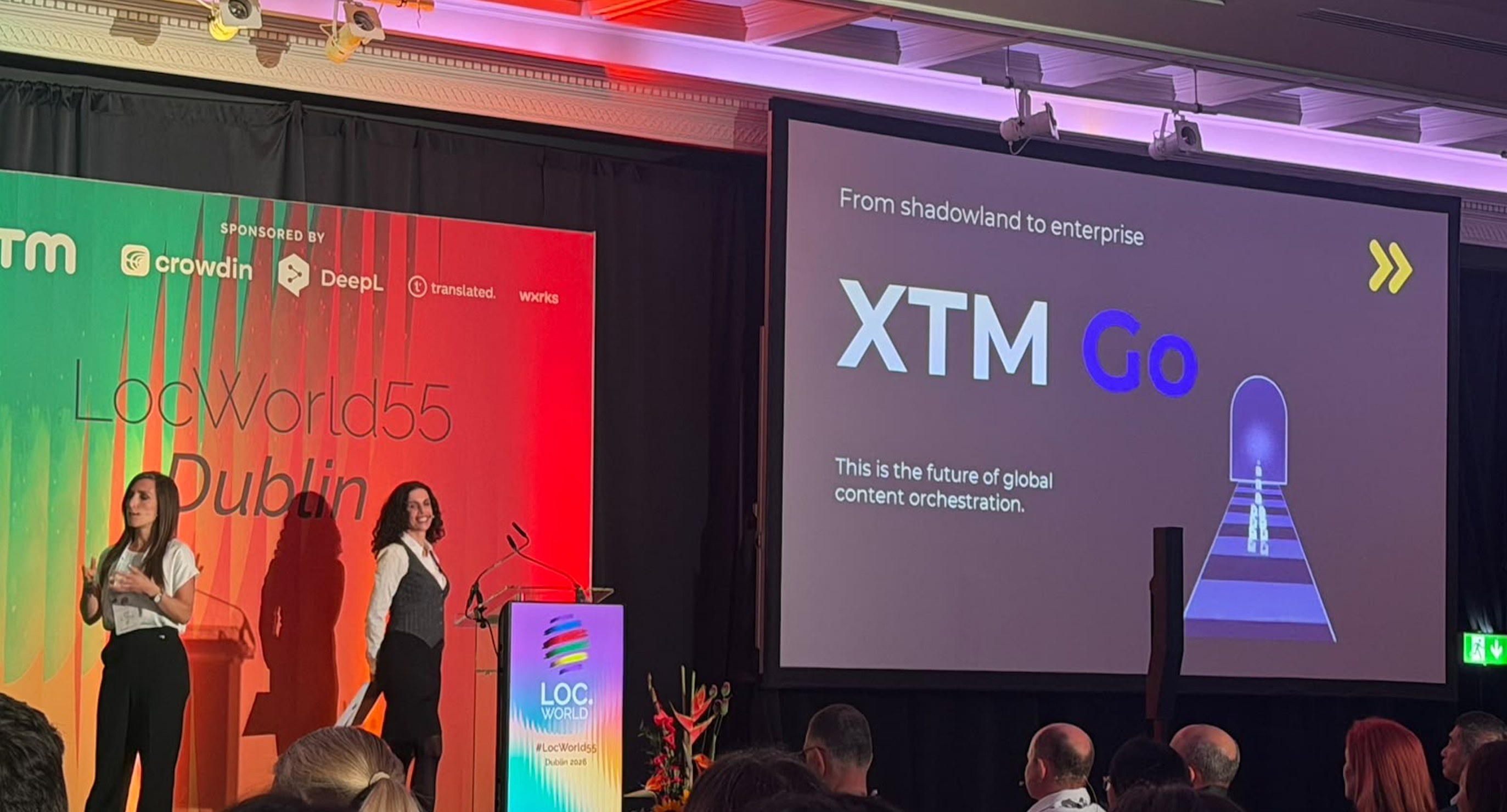
On Wednesday June 10, I won the Process Innovation Challenge, PIC #20. The contest brings together the most innovative and promising new ideas in the industry and lets the audience and a jury (“Dragons”) pick the winner, so taking it home felt like the room voting on where localization should go next.
XTM Go is a risk-aware translation gateway built for that invisible translation demand. It weighs each request by risk, intent, and complexity before it decides how to handle the work, and it self-optimizes based on past outcomes. Here's how that plays out:
- Routine content comes back in minutes through AI.
- Anything sensitive escalates automatically to human-assisted workflows.
- Approved translations are reused first, so consistency holds.
- Complex files come back with their structure intact.
Because there's no friction to work around, XTM Go draws everyday translation through a governed front door instead of pushing people to paste content into whatever tool is open in another tab. XTM Go is headless, so you don’t need to log into a UI to actually get your content translated. XTM Go can be embedded in any tool or interface your teams are already using.
Thanks to the intelligent orchestration capabilities of XTM Go, the human role graduates from configuring workflows to setting the guardrails. XTM Go takes localization out of the shadowland and back into the Enterprise.
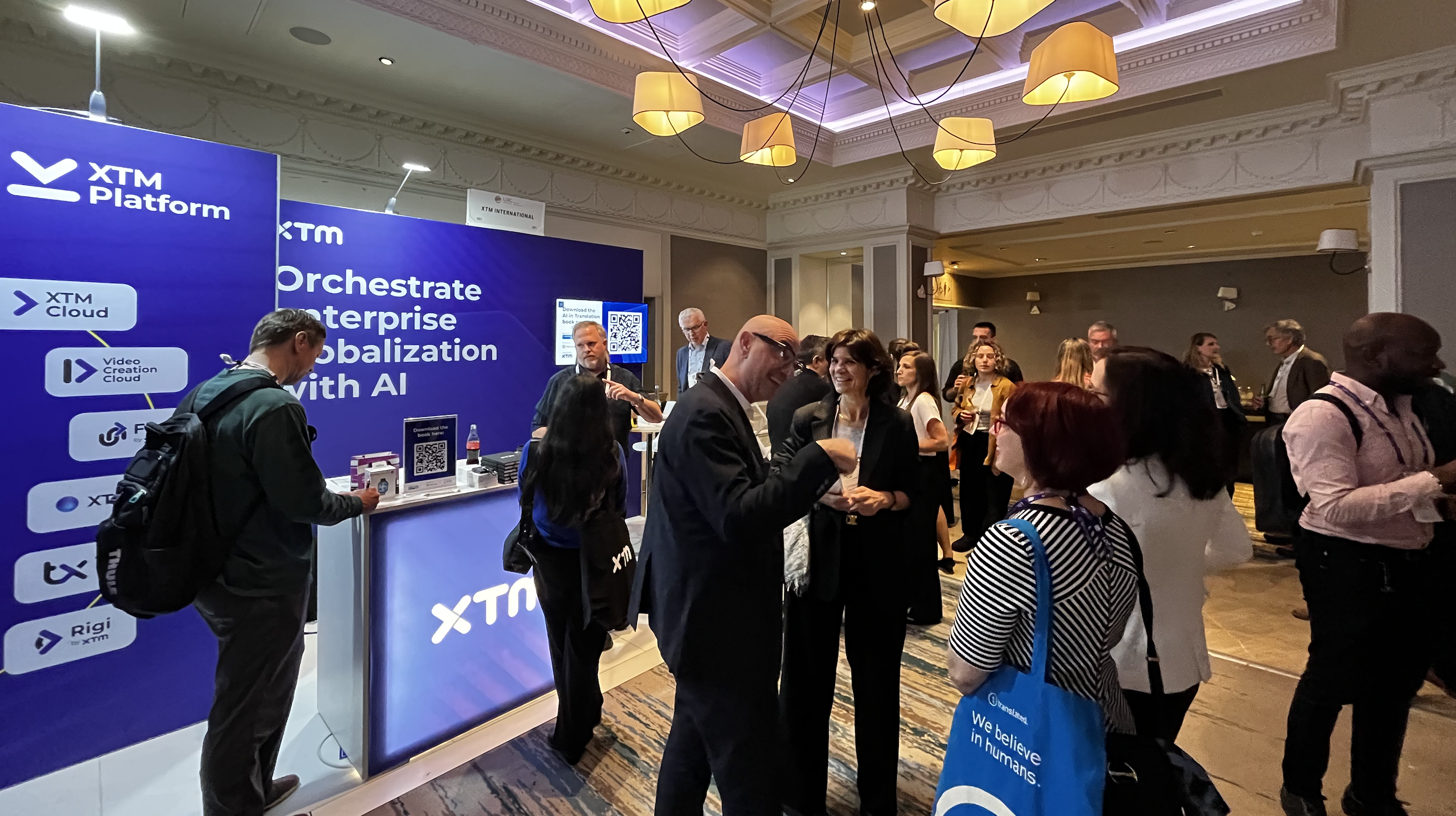
After the pitch, the input from participants and fellow exhibitors did more for me than any roadmap review could. There's no better product discovery than the kind that happens on the floor, in context, with people mapping back to the business outcomes XTM Go would help them achieve.
Highlight 2: We launched the book “AI in Translation” with Multilingual and LanguageLine
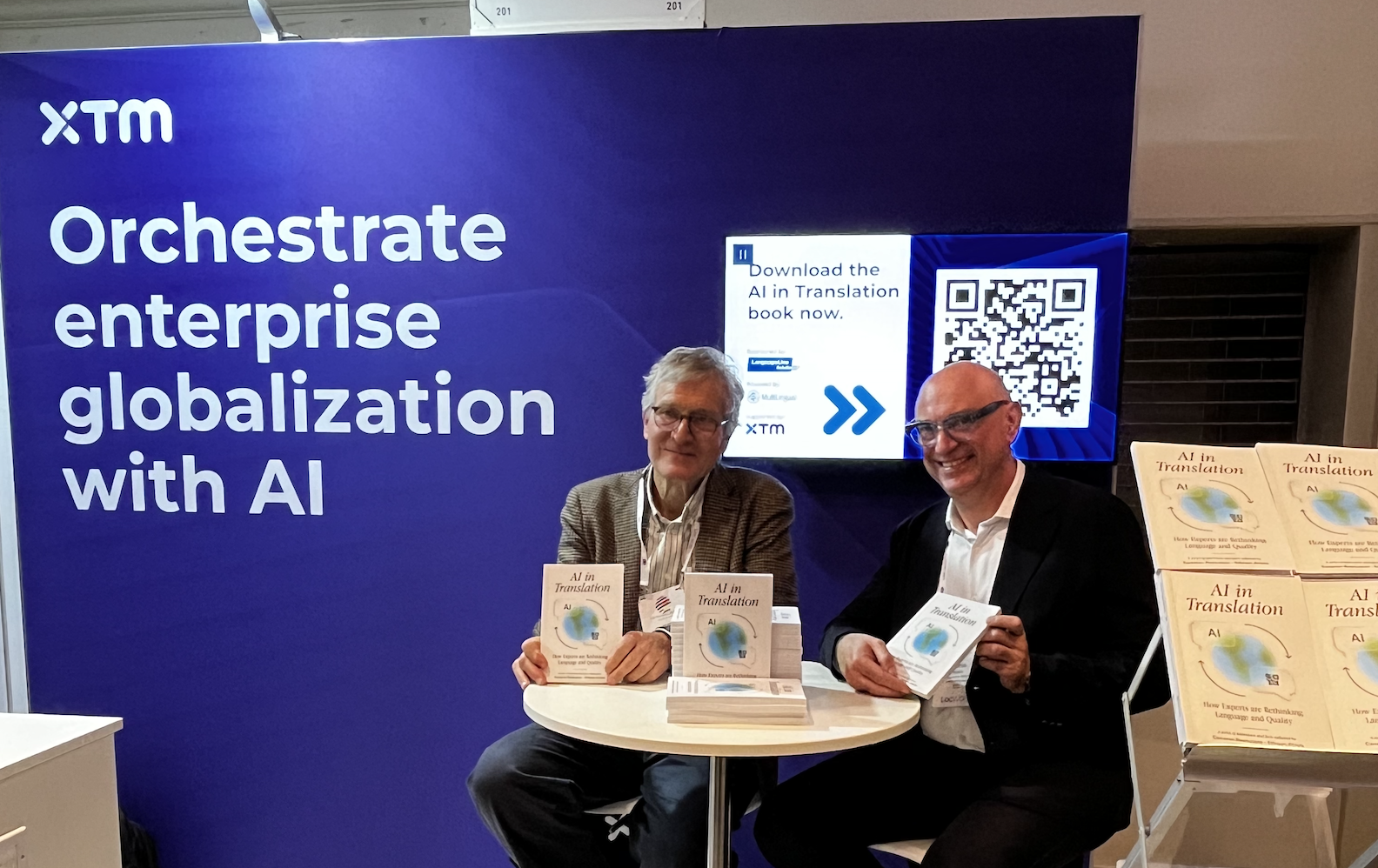
Just ahead of the conference, we marked the launch of AI in Translation, a new industry book produced with Multilingual and LanguageLine. It's an honest, expert-led guide to navigating AI in language work, and we're proud of how candid it is.
The book brings together more than a dozen leading voices, from TikTok, Adobe, Uber, TED, Revolut, and beyond. The conversations are about what quality really means in an AI-first world, and where human judgment begins when automation ends. It isn't a technology story. It's a human one.
Renato Beninatto, co-founder of Nimdzi Insights, frames the next decade well. AI won't replace people, he argues. It'll raise the cost of the wrong hire and the value of the right one. That tension runs through every interview in the book.
You can download a complimentary copy here.
Takeaway 1: The human factor moved to the core
The human is still at the heart of this industry, and the role is evolving fast. We're moving from "system orchestrator" to "governance owner" to "cultural specialist," and that shift is finally letting the community speak in terms of outcome instead of output. That's a bigger deal than it sounds.
For buyers especially, it changes the seat at the table. Localization leaders are moving from cost center to strategic advisor, and in some cases to outright leader. When you own governance and cultural judgment rather than throughput, executives start treating you as someone who shapes strategy, not someone who reports on volume.
This is the thread Alison Toon pulled at our Dublin City Tour the week before, and LocWorld only reinforced it. Human at the core, not human in the loop.
Takeaway 2: buyers can build now, and that reshapes build versus buy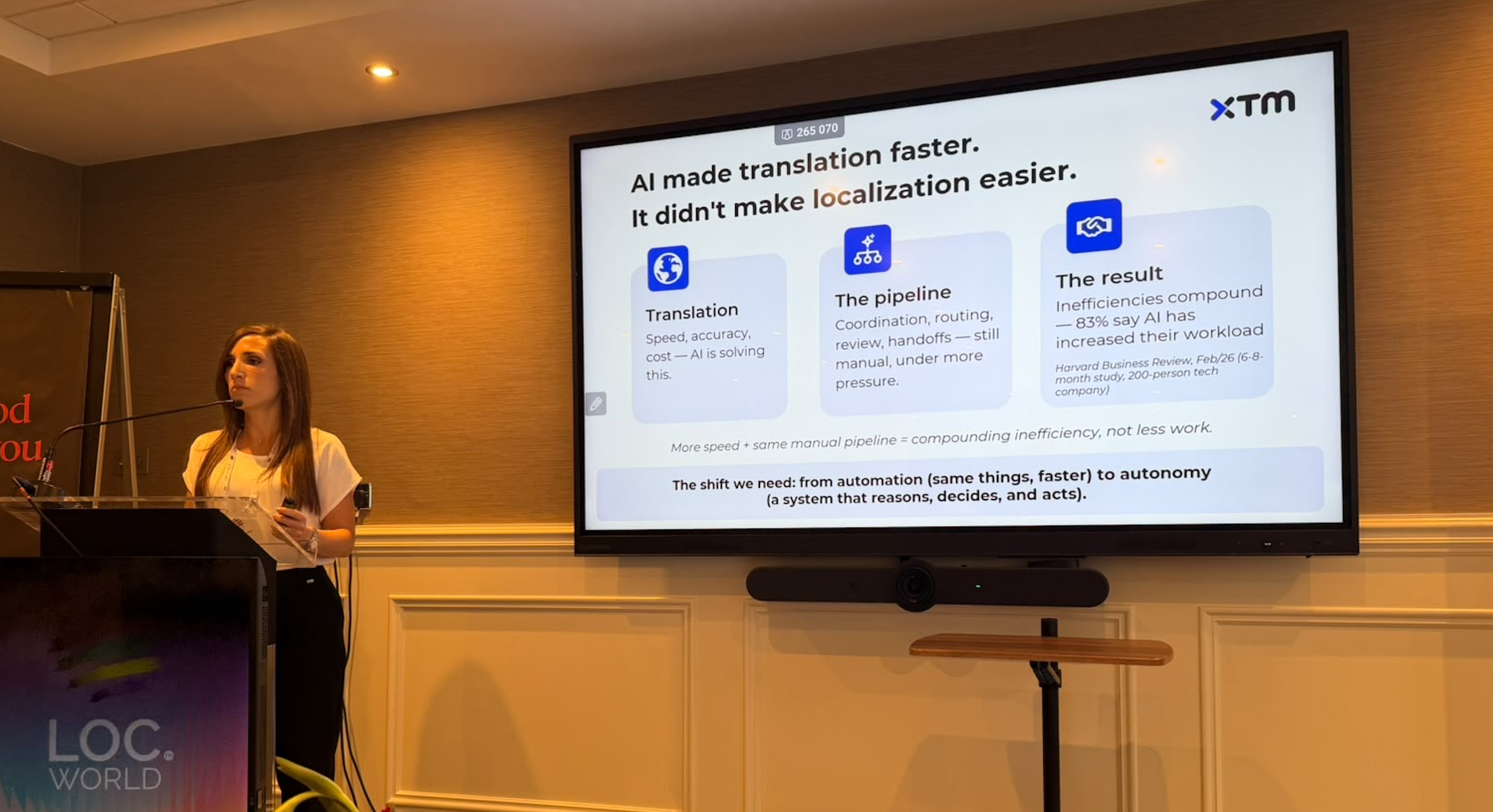
The GenAI era has created a fascinating dynamic on the buyer side. Localization professionals now hold both things at once: the experience from the field, and a new ability to build systems and engineer processes themselves at a speed and accuracy that didn't exist two years ago.
That changes the old build versus buy conversation into something more powerful. It's less "do we make it or buy it" and more "what do we build, what do we partner on, and where's the line." For providers, technology or language, that's a challenge and an opportunity at the same time.
There's a related pressure worth naming. The sheer accessibility of today's AI experiments and deployments is pushing vendors hard toward simpler, more accessible solutions. Customized and domain-relevant AI still matters enormously, but the expectation now is to get there with far less friction, turnaround time, and manual intervention. Bring-your-own-key setups and agentic approaches are part of how that gets easier.
Takeaway 3: Governance was the word, and autonomy is the destination
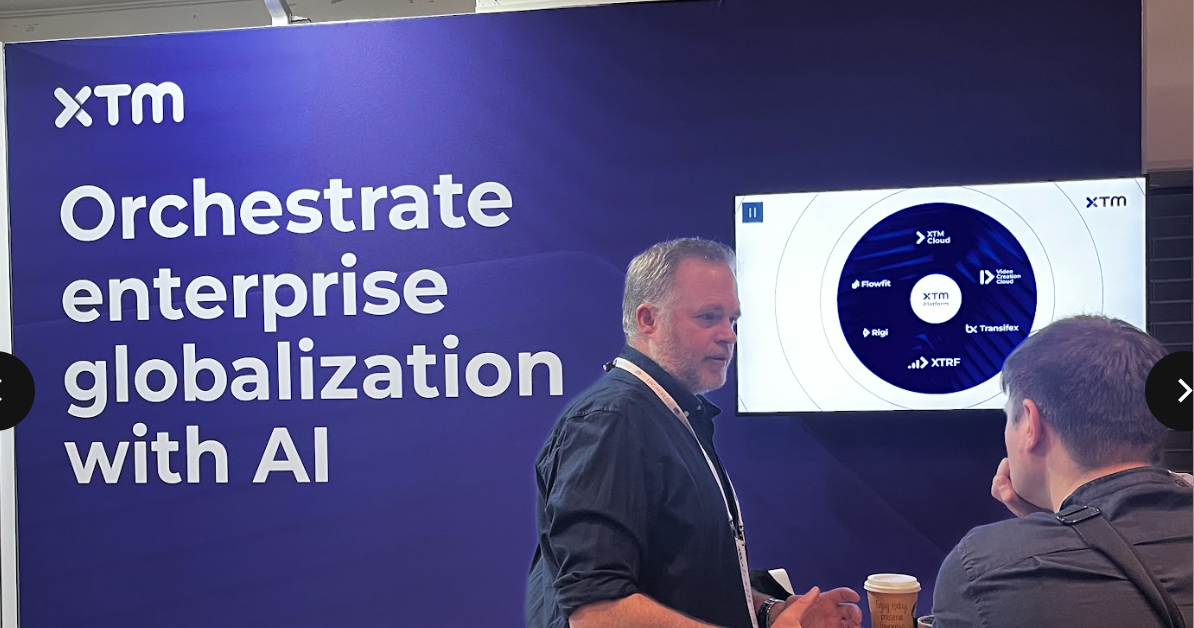
Governance was the keyword running through every single conversation in Dublin. The opportunity now is to strike the right balance between governance and innovation, so control doesn't quietly strangle the experimentation that got us here.
The good news is that the "AI shiny object" syndrome is, by my read, definitively over. Compared with a couple of years ago, you can feel the difference. Experimentation, curiosity, and hard lessons from genuinely difficult implementations have given the industry the knowledge to recognize where current LLM-driven and agentic systems actually fall short. That's maturity, and it's healthy.
Which brings me to the shift I'm most convinced by: the move from automation to autonomy is real. The technology already exists to make autonomous localization possible. The harder part is our responsibility, not the model's.
Final thoughts
If you only keep three things from the whole event, make it these.
→ The human moved to the core, not out of the picture. The durable roles are governance, cultural judgment, and validation. Reframe your function around outcomes, and the budget conversation changes shape.
→ Build versus buy is becoming build with. Buyers can engineer now, so the providers worth keeping are the ones obsessed with your value, not their feature list. They're also the ones open enough to let you build alongside them, rather than locking you in. That openness has been in XTM's DNA from the very beginning, and it matters more now than it ever has. Partner where it compounds, build where it differentiates.
→ Autonomy is coming, and governance decides whether it's an asset or a liability. The tech is ready. The guardrails are the work. I genuinely believe AI in Translation gives you the fullest picture of how this plays out in practice. And if you'd rather talk it through, we have a whole team who spend their days helping people work this out, so book a demo and one of them will walk you through it properly.

Subscribe for More
Lorem ipsum dolor sit amet, consectetur adipiscing elit, sed do eiusmod tempor incididunt ut labore et dolore magna aliqua. Ut enim ad minim veniam, quis nostru.